Welcome to Dengue Virus Net
Dengue Virus Net is the web resource for anyone interested in dengue. The objectives of Dengue Virus Net are to be the public and professional information resource for dengue and to serve as a network in the exchange of information and news related to dengue.
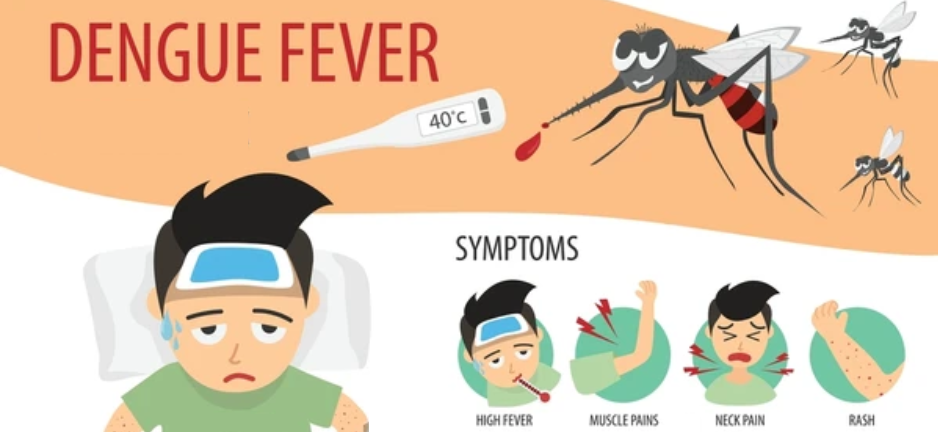
Dengue is a mosquito-borne infection that causes a severe flu-like illness (dengue fever), and sometimes a potentially lethal complication called dengue haemorrhagic fever. Global incidence of dengue has grown dramatically in recent decades. About two fifths of the world's population are now at risk. Dengue is found in tropical and sub-tropical climates worldwide, mostly in urban and semi-urban areas. Dengue is transmitted to humans by the Aedes aegypti or more rarely the Aedes albopictus mosquito, which feed during the day. Dengue haemorrhagic fever is a leading cause of serious illness and death among children in some Asian countries. There is currently no specific treatment for dengue.
Dengue News and Headlines
- CM announces Rs 1 lakh relief for dengue victims - Deccan Herald
Sat, 25 May 2013 20:10: - Suspected dengue cases on the rise in district - Times of India
Sat, 25 May 2013 20:06: - Increase in dengue looms large in the city - Sunday Observer
Sat, 25 May 2013 19:44: - District gears up to prevent dengue - Times of India
Sat, 25 May 2013 19:03: - CM announces Rs 1 lakh compensation to dengue fever victim families - Times of India
Sat, 25 May 2013 16:46: - Four children die of suspected dengue - The Hindu
Sat, 25 May 2013 08:48: - DC sets five-day deadline for anti-dengue operation - The Hindu
Sat, 25 May 2013 08:46: - More dengue cases on city outskirts - The Hindu
Sat, 25 May 2013 06:57: - Dengue threat looms large over Mysore - Daily News & Analysis
Sat, 25 May 2013 06:23: - 11 dengue cases reported in four days - The News International
Sat, 25 May 2013 05:02:
Latest Articles on Dengue
- Primuline Derivatives That Mimic RNA To Stimulate Hepatitis C Virus NS3 Helicase-Catalyzed ATP Hydrolysis.
Sweeney NL, Shadrick WR, Mukherjee S, et al. Primuline Derivatives That Mimic RNA To Stimulate Hepatitis C Virus NS3 Helicase-Catalyzed ATP Hydrolysis. [JOURNAL ARTICLE]J Biol Chem 2013 May 23.ATP hydrolysis fuels the ability of helicases and related proteins to translocate on nucleic acids and separate base pairs. As a consequence, nucleic acid binding stimulates the rate at which a helicase catalyzes ATP hydrolysis. In this study, we searched a library of small molecule helicase inhibitors for compounds that stimulate ATP hydrolysis catalyzed by the hepatitis C virus (HCV) NS3 helicase, which is an important antiviral drug target. Two compounds were found that stimulate HCV helicase-catalyzed ATP hydrolysis, both of which are amide derivatives synthesized from the main component of the yellow dye primuline. Both compounds possess a terminal pyridine moiety, which was critical for stimulation. Analogs lacking a terminal pyridine inhibited HCV helicase catalyzed ATP hydrolysis. Unlike other HCV helicase inhibitors, the stimulatory compounds differentiate between helicases isolated from various HCV genotypes and related viruses. The compounds only stimulated ATP hydrolysis catalyzed by NS3 purified from HCV genotype 1b. They inhibited helicases from other HCV genotypes (e.g. 1a and 2a) or related flaviviruses (e.g. Dengue virus). The stimulatory compounds interacted with HCV helicase in the absence of ATP with dissocia-tion constants of about 2 μM. Molecular modeling and site-directed mutagenesis stud-ies suggest that the stimulatory compounds bind in the HCV helicase RNA-binding cleft near key residues Arg393, Glu493, and Ser231. - The larvicidal activity of brown algae Padina minor (Yamada 1925) and Dicyota linearis (Greville 1830) against the dengue vector, Aedes aegypti (Linn 1762) (Diptera: Culicidae).
Bantoto V, Dy D The larvicidal activity of brown algae Padina minor (Yamada 1925) and Dicyota linearis (Greville 1830) against the dengue vector, Aedes aegypti (Linn 1762) (Diptera: Culicidae). [JOURNAL ARTICLE]J Vector Borne Dis 2013 January-March; 50(1):68-70. - An analysis on model development for climatic factors influencing prediction of dengue incidences in urban cities.
Kar PK, Ghosh SK An analysis on model development for climatic factors influencing prediction of dengue incidences in urban cities. [JOURNAL ARTICLE]Indian J Med Res 2013 Apr; 137(4):811-812. - Serological & molecular approaches for diagnosis of leptospirosis in a tertiary care hospital in north India: A 10-year study.
Chaudhry R, Das A, Premlatha MM, et al. Serological & molecular approaches for diagnosis of leptospirosis in a tertiary care hospital in north India: A 10-year study. [JOURNAL ARTICLE]Indian J Med Res 2013 Apr; 137(4):785-790.Background & objectives: Leptospirosis, a spirochetal zoonosis, is underreported from the northern States of India. This study reports results of a 10-year retrospective sero-epidemiological survey of leptospirosis conducted in a tertiary care hospital in New Delhi, India. Method: A total of 1453 patients clinically suspected for leptospirosis were included and investigated initially by IgM ELISA. A proportion of these were subjected to culture, microscopic agglutination test (MAT) and polymerase chain reaction (PCR). Results: Of the 1453 patients, 391 (26.90%) were positive serologically by IgM ELISA. Seropositive and seronegative patients revealed no significant difference in clinical features and laboratory parameters. Amongst the IgM seropositive cases, culture for leptospires was positive in 5 of 192 (2.6%), MAT in 50 of 138 (36.23%), PCR from blood and urine in 10 of 115 (8.7%) and 10 of 38 (26.31%) cases, respectively. In Leptospira spp. positive patients co-infections with viral hepatitis E, malaria and dengue fever were diagnosed in 27 cases. Interpretation & conclusions: The overall seropositivity for leptospirosis was 26.9 per cent in our study. A decreasing trend in seropositivity was observed in recent years. Co-infections with malaria, dengue, hepatitis A and E were also seen. Since leptospirosis is a treatable disease, correct and rapid diagnosis may help in effective management of patients. - Development and laboratory evaluation of chemically-based baited ovitrap for the monitoring of Aedes aegypti.
Baak-Baak CM, Rodríguez-Ramírez AD, García-Rejón JE, et al. Development and laboratory evaluation of chemically-based baited ovitrap for the monitoring of Aedes aegypti. [JOURNAL ARTICLE]J Vector Ecol 2013 Jun; 38(1):175-181.Aedes (Stegomyia) aegypti is considered to be the most important dengue vector worldwide. Studies were conducted to design and evaluate a chemically-based baited ovitrap for monitoring Ae. aegypti under laboratory conditions. Several known chemical attractants and three types of ovitraps (ovitraps A, B, and C) were evaluated throughout the oviposition bioassays. Oviposition responses of gravid female Ae. aegypti were evaluated to n-heneicosane, 3-methylindole (skatole), 4-methylphenol (p-cresol), and phenol. Female Ae. aegypti were attracted to all the evaluated compounds. Among them, n-heneicosane at a concentration of 10 ppm (mg/l), skatole from 50 to 1000 ppm, p-cresol at 100 ppm, and phenol at 50 ppm showed a significant positive oviposition response. A blend of the four chemical attractants increased the oviposition response; 67% of the eggs were deposited in the treatment compared to the control. Female Ae. aegypti were significantly more attracted to ovitrap A loaded with the four-component synthetic blend compared to the standard ovitrap in the oviposition bioassays. The compound used in ovitrap A retained its attractant property for up to three days. The chemically-based baited ovitrap may be considered as an option to be integrated during the monitoring of dengue virus vectors in México. - Inter-population mating success in Australian dengue vector mosquitoes: effects of laboratory colonization and implications for the spread of transgenics.
Richardson AJ, Williams CR Inter-population mating success in Australian dengue vector mosquitoes: effects of laboratory colonization and implications for the spread of transgenics. [JOURNAL ARTICLE]J Vector Ecol 2013 Jun; 38(1):111-119.Variability between Aedes aegypti populations in north Queensland, Australia, has the potential to impact the successful implementation of new population replacement mosquito releases for dengue control. Four Ae. aegypti colonies originating from different locations (Cairns, Mareeba, Innisfail, and Charters Towers), along with one F1 field-derived population from Cairns, were inter-crossed to determine any incompatibilities in copulation, insemination, and production of viable offspring. Greater copulation and insemination rates were observed when males recently introduced from the wild ('Cairns-Wild' population) were mated with long-term laboratory females. Egg viability rates for all crosses ranged from 90.2-98.2%, with no significant differences observed between crosses. Greater egg production was seen in some populations, and when corrected for wing-length, egg production was greatest in a Mareeba x Innisfail cross (19.55 eggs/mm wing length) and lowest for the Charters Towers intra-population cross (14.35 eggs/mm). Additionally, behavioral differences were observed between laboratory and wild mosquitoes from the Cairns location, suggesting possible laboratory conditioning. Finally, despite controlled larval rearing conditions, size differences between populations existed with Charters Towers mosquitoes consistently smaller than the other populations. The spread of genes or bacterial symbionts between these populations is unlikely to be hindered by pre-existing reproductive barriers. - A case study of the influence of local weather on Aedes aegypti (L.) aging and mortality.
Lucio PS, Degallier N, Servain J, et al. A case study of the influence of local weather on Aedes aegypti (L.) aging and mortality. [JOURNAL ARTICLE]J Vector Ecol 2013 Jun; 38(1):20-37.The survival rate of mosquitoes is an important topic that affects many aspects of decision-making in mosquito management. This study aims to estimate the variability in the survival rate of Ae. aegypti, and climate factors that are related to such variability. It is generally assumed that the daily probability of mosquito survival is independent of natural environment conditions and age. To test this assumption, a three-year fieldwork (2005-2007) and experimental study was conducted at Fortaleza-CE in Brazil with the aim of estimating daily survival rates of the dengue vector Aedes aegypti under natural conditions in an urban city. Survival rates of mosquitoes may be age-dependent and statistical analysis is a sensitive approach for comparing patterns of mosquito survival. We studied whether weather conditions occurring on a particular day influence the mortality observed on that particular day. We therefore focused on the impact of daily meteorological fluctuations around a given climate average, rather than on the influence of climate itself. With regard to survival time, multivariate analyses using the stepwise logistic regression model, adjusted for daily temperature, relative humidity, and saturated vapor pressure deficit (SVPD), suggest that age, the seasonal factor, and the SVPD were the most dependent mortality factors. Similar results were obtained using the Cox proportional hazard model, which explores the relationships between the survival and explanatory variables. - Dengue virus: two hosts, two structures.
Rey FA Dengue virus: two hosts, two structures. [Journal Article]Nature 2013 May 23; 497(7450):443-4.Publisher Full Text - Differentially Expressed Genes of Human Microvascular Endothelial Cells in Response to Anti-Dengue Virus NS1 Antibodies by Suppression Subtractive Hybridization.
Yin Y, Jiang L, Fang D, et al. Differentially Expressed Genes of Human Microvascular Endothelial Cells in Response to Anti-Dengue Virus NS1 Antibodies by Suppression Subtractive Hybridization. [JOURNAL ARTICLE]Viral Immunol 2013 May 22.AbstractPublisher Full TextPublisher Full TextAbstract It has been previously shown that anti-dengue virus (DENV) nonstructural protein NS1 antibodies could act as autoantibodies that direct against one or more of the host's own proteins, which has potential implications for dengue hemorrhagic fever pathogenesis. In the present study, we have employed suppression subtractive hybridization (SSH) to identify the differentially expressed genes from human microvascular endothelial cells (HMEC-1) in response to anti-dengue virus type 2 NS1 antibodies (anti-DENV2 NS1 Abs). A total of 35 clones from the SSH cDNA library were randomly selected for further analysis using bioinformatics tools after vector screening. After searching for sequence homology in NCBI GenBank database with BLASTN and BLASTX programs, 23 obtained sequences with significant matches (E-values <1×10(-4)) in the SSH library. The predicted genes in the subtracted library include immune response molecules (CD59 antigen preproprotein preproprotein, MURR1), signal transduction molecules (Nuclear casein kinase and cyclin-dependent kinase substrate 1), calcium-binding proteins (S100A6, Annexin A2 isoform 1/2), and cell-membrane component (Yip1 domain family). From these clones, 5 upregulated genes were selected for differential expression profiling by real-time RT-PCR to confirm their upregulated status. The results confirmed their differential upregulation, and thus verified the success of SSHs and the likely involvement of these genes in dengue pathogenesis. - In Memoriam: Susumu Hotta (1918-2011).
Konishi E, Kuno G In Memoriam: Susumu Hotta (1918-2011). [JOURNAL ARTICLE]Emerg Infect Dis 2013 May; 19(5)Aggregator Full Text